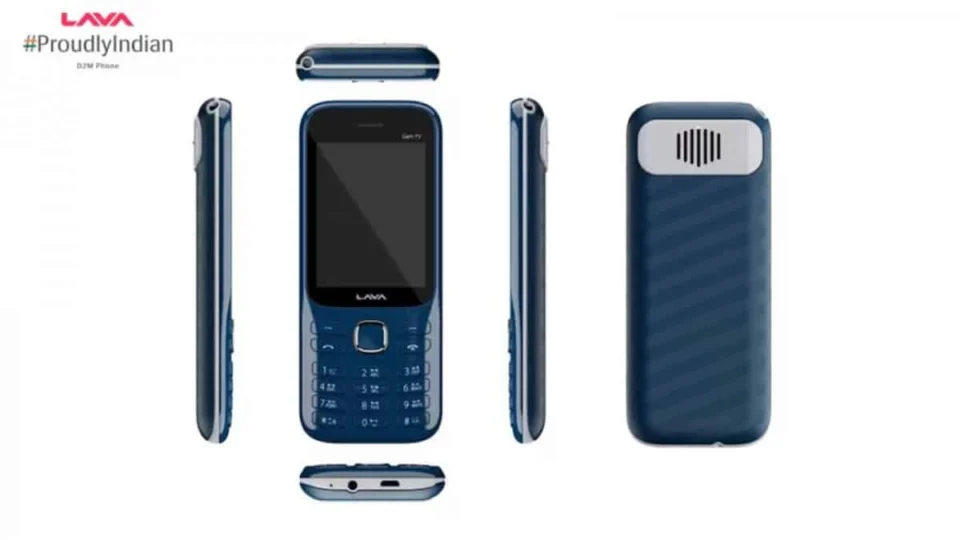
HMD and Lava to Launch Groundbreaking PhonesFinnish mobile manufacturer HMD in collaboration with India‘s Lava is poised to unveil new mobile phones capable of receiving terrestrial TV broadcasts directly, eliminating the requirement for internet or Wi-Fi connectivity. These pioneering devices leverage Direct-to-Mobile (D2M) technology and will be introduced at the World Audiovisual and Entertainment Summit (WAVES) 2025, scheduled for May 1-4 at the Jio World Convention Center in Mumbai, India.Lava has revealed a partnership with Tejas Networks to develop a novel feature phone, integrating the MediaTek MT6261 chipset alongside Saankhya’s SL3000 chip. This device will boast a 2.8-inch display, a robust 2,200 mAh battery, and an ultra-high frequency (UHF) antenna designed specifically to capture terrestrial TV waves. While HMD remains discreet about the technical specifications of its forthcoming phone, expectations run high.Understanding D2M TechnologyD2M technology represents a revolutionary step in telecom, enabling phones to directly receive terrestrial TV broadcasts using built-in UHF antennas. This eliminates reliance on internet connectivity. Although terrestrial digital TV broadcasts have been under trial for years, they have not been widely implemented until now, with India leading the charge. Remarkably, this technology is now set to transition from televisions to mobile devices.Beyond enhancing multimedia experiences, D2M technology offers promising applications in disseminating emergency alerts and educational content more effectively. Anchored in the Advanced Television Systems Committee (ATSC) 3.0 standards, this technology has undergone extensive trials in India through Prasar Bharati, showcasing its potential to transform the way broadcast content is consumed.
Innovative Mobile Phones to Receive Terrestrial TV Broadcasts
Explore cutting-edge mobile phones that bring terrestrial TV broadcasts to your fingertips. Discover innovation in mobile viewing today.
 YazanSigorta Haber
Yayınlandı Güncellendi 2 dk okuma

YAZAR
Sigorta Haber
Finans ve ekonomi alanında uzman. Piyasa analizleri, yatırım stratejileri ve makroekonomik gelişmeler üzerine içerikler üretir.
Yazar profili ve tüm yazıları