
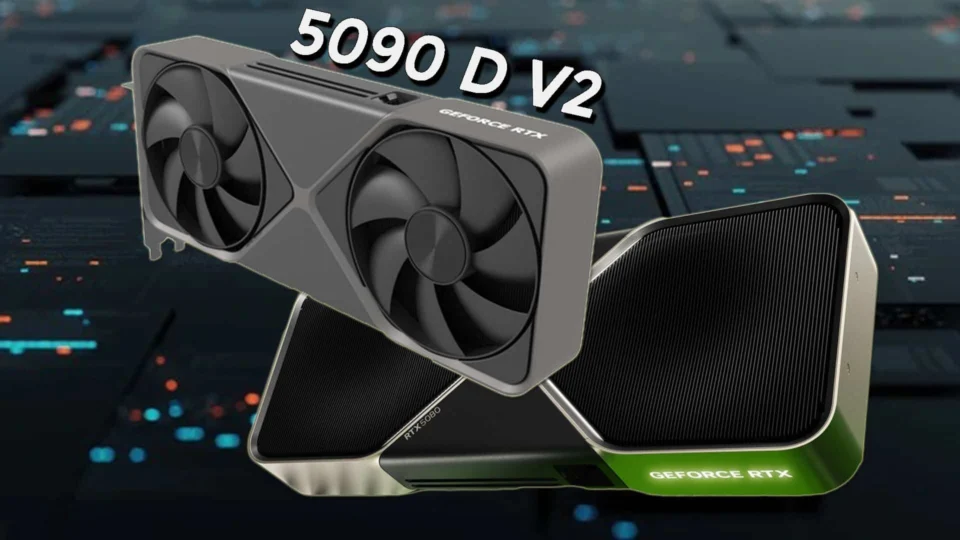
The evolving landscape of Nvidia‘s high-performance GPU strategy in China has become even more complex amid ongoing U.S. export restrictions. These limitations, designed to curb access to cutting-edge computing hardware, have sparked heated debate about their true effectiveness. Recently, it was reported that hundreds of RTX 5090 graphics cards, supposedly restricted from export, have made their way into the Chinese market.
Although official export channels remain limited, reports indicate that some shipments are being redirected through third-party countries such as Malaysia and Singapore. New images allegedly show large deliveries from brands like MSI and Gigabyte arriving in China. The lack of the distinctive “v2” marking on packaging—a label denoting export compliance—suggests that these GPUs bypassed standard procedures.
Rising AI Demand and the Shadow Market
Due to the explosive growth of artificial intelligence applications, the global hunger for top-tier GPUs has significantly intensified. This surge is not only raising prices but also reducing availability for traditional PC gamers. Many of the imported RTX 5090 models are believed to be repurposed for AI-related workloads rather than consumer gaming.
Chinese companies are known to reconfigure consumer-grade GPUs—increasing memory capacity and modifying cooling solutions—to create AI-optimized systems. This trend underscores the blurred boundary between gaming hardware and professional AI computing tools.
The Future of Nvidia’s Strategy
Analysts point out that while the U.S. export rules appear stringent on paper, their real-world enforcement remains somewhat porous. As a result, Nvidia’s ongoing strategy in the region is under scrutiny. Questions persist about how the company might adapt its distribution model or introduce new classifications for its products to comply with international regulations.
Meanwhile, speculation is growing that China-based hardware manufacturers may accelerate efforts to develop domestic alternatives. Whether these solutions can match Nvidia’s performance remains to be seen, but the momentum for local innovation continues to build rapidly in response to these restrictions.