


The Rise of the Boeing F-47
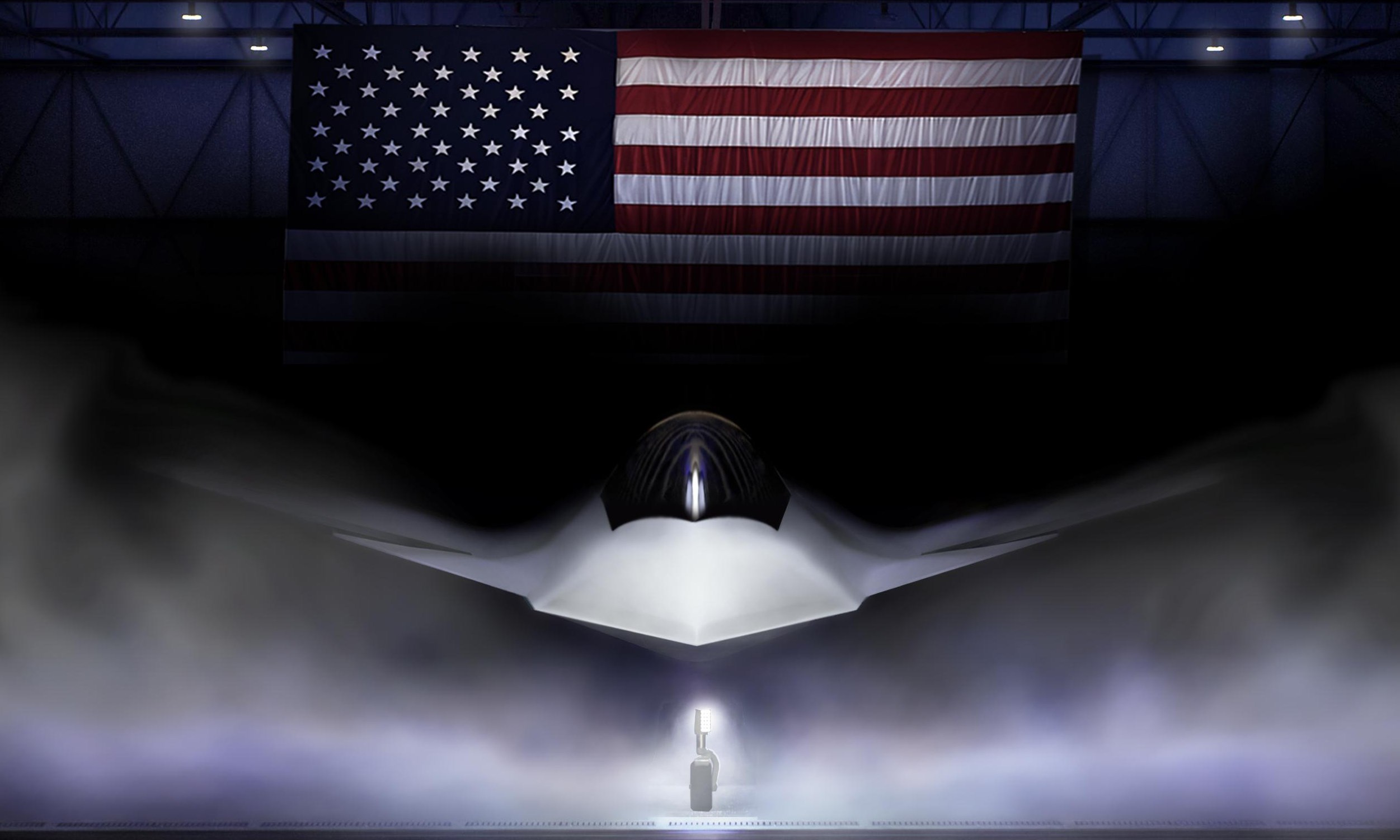
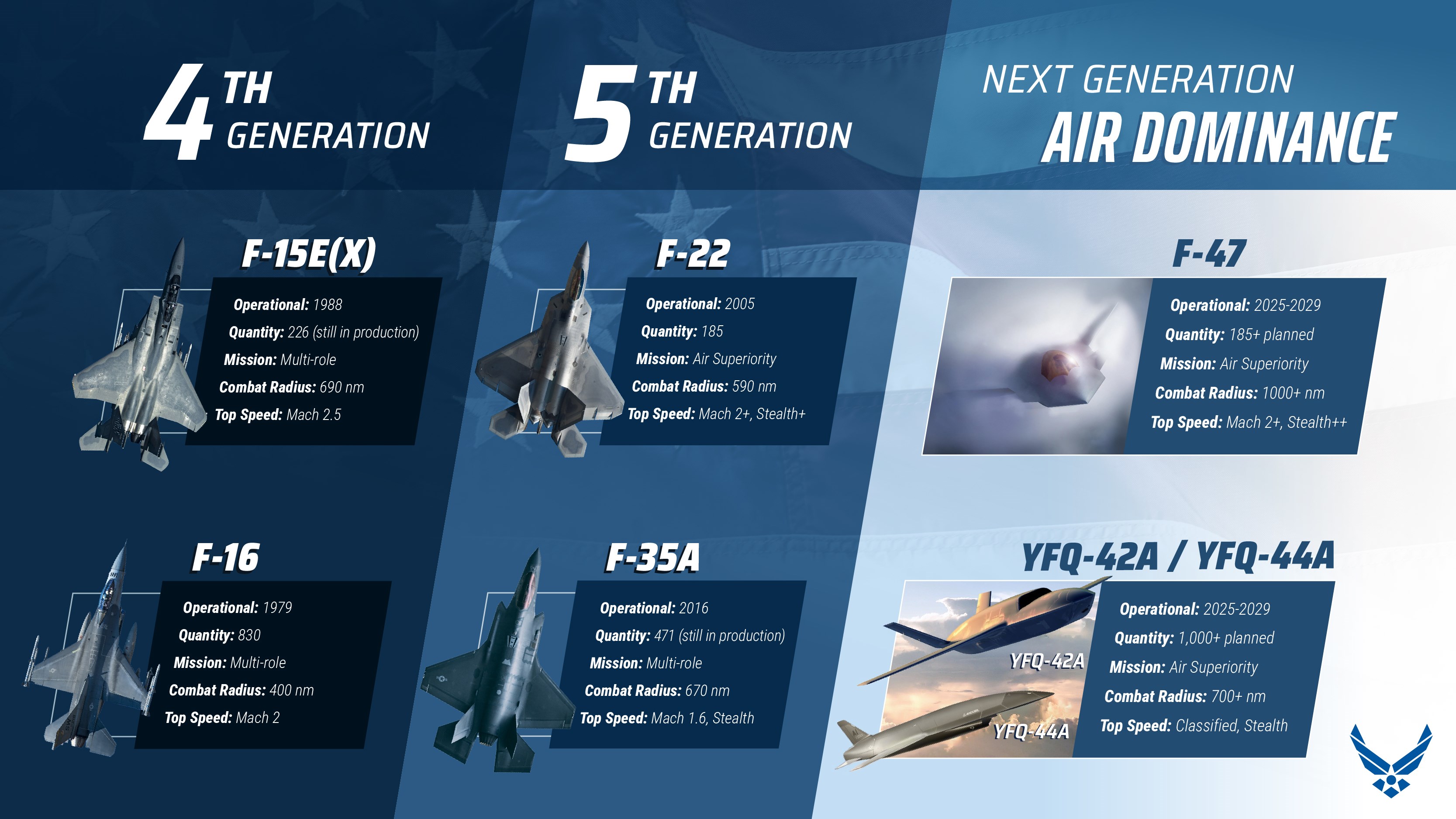
In March, US President Donald Trump awarded Boeing the prestigious contract for the Pentagon’s next-generation fighter jet as part of the Next Generation Air Dominance (NGAD) program, christening it the Boeing F-47. Initial details were scarce, but a recent infographic by US Air Force Commander General David Allvin, shared on X, offers insights into the advanced capabilities of the F-47 and the innovative Collaborative Combat Aircraft (CCA) that will accompany it.
Outperforming the F-22
Developed to surpass its predecessors, the F-47 boasts a 70 percent greater mission range compared to the F-22 Raptor, providing an operational radius exceeding 1,000 nautical miles (approximately 1,852 kilometers). This extended range is pivotal in the Indo-Pacific, allowing tanker aircraft to operate further from Chinese air defense systems. While both the F-47 and F-22 achieve speeds above Mach 2, the F-47’s enhanced Stealth++ capabilities far exceed the F-22’s “Stealth+” and the F-35’s “Stealth”, offering superior radar, infrared, and visual invisibility.
Production Plans and Capabilities
The US Air Force aims to acquire over 185 units of the F-47, potentially matching or exceeding the F-22 fleet, which was limited by budget constraints. General Allvin emphasized the F-47’s lower cost compared to the F-22, with operational deployment expected between 2025 and 2029. The timeline remains ambiguous, possibly referring to initial flights, operational capability, or full deployment.

Unmanned Aerial Companions
Accompanying the F-47 are advanced unmanned systems: General Atomics‘ YFQ-42A and Anduril‘s YFQ-44A. These CCAs are designed to operate over 700 nautical miles (approximately 1,296 kilometers) with classified speed capabilities and stealth features. Test flights are projected to commence in 2025, with full operational status by 2029. The US plans to procure more than 1000 of these UAVs, integrating them with existing fighters like the F-22 and F-35 to form hybrid fleets where manned and unmanned elements collaborate seamlessly.
Strategic Response to China
The revelation of the F-47 aligns with China’s testing of sixth-generation prototypes, such as the J-36 and J-50. Although unofficial, these tests bolster China’s claims of airspace dominance, with capabilities extending to 1,000 kilometers and speeds reaching Mach 2.5. Experts suggest that the US’s F-47 and CCA systems are designed to counter China’s anti-access/area denial (A2/AD) strategy, particularly in the Indo-Pacific. These advanced aircraft will enable operations from more secure, distant bases, reducing the risk to US forces in conflict zones.