
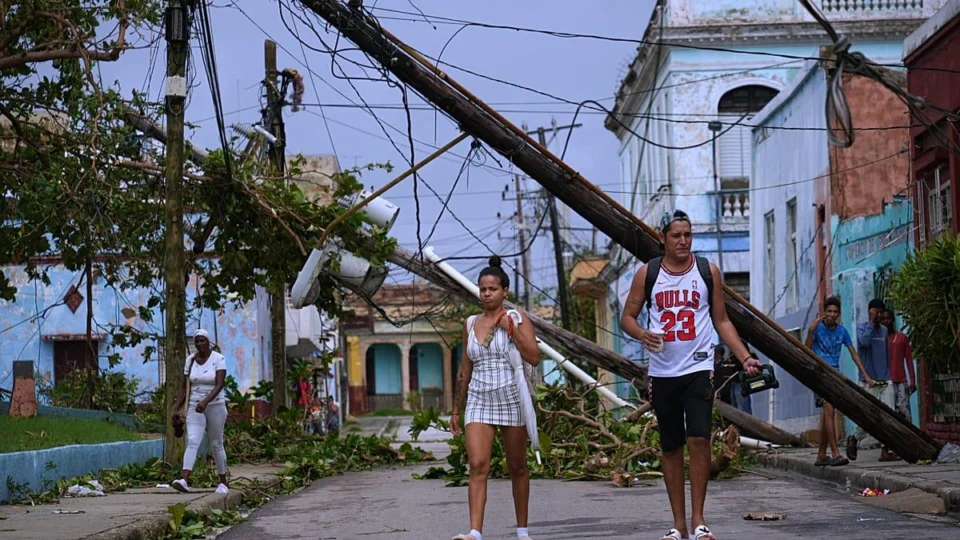
All 25,000 international visitors who were in Jamaica during the devastating arrival of Hurricane Melissa on 28 October have been safely located and are reported to be in good health, according to Edmund Bartlett, the nation’s tourism minister. However, hundreds of travellers are still waiting to leave the island as airports that closed ahead of the hurricane struggle to resume regular operations. The storm, described as the strongest of the year and Jamaica’s most destructive in decades, left a path of significant devastation across the Caribbean.
Europe’s largest travel provider, TUI, has suspended all package holidays to Jamaica until 9 November. Officials confirmed widespread structural damage and extensive flooding, with the death toll across the region now at 49. Recovery efforts are underway, with authorities focusing on rebuilding critical transport and tourism infrastructure.
Airports Begin Reopening Amid Severe Disruption
In anticipation of the hurricane, the nation’s two primary airports—Sangster International Airport in Montego Bay and Norman Manley International Airport in Kingston—were closed before landfall. Flight arrivals and departures remain heavily affected, and operations at Sangster are still suspended as safety inspections continue. According to Bartlett, officials hope to restore limited operations within the next few days.
On social platform X, Sangster Airport confirmed that a full assessment is being conducted to determine when normal activity can safely resume, urging passengers to check with their airlines before heading to the terminal. Meanwhile, Norman Manley Airport has reopened to select services, having welcomed relief flights on Wednesday and restarted commercial operations on Thursday. Travellers are advised to allow extra time for check-ins and follow any updated airline notifications.
Stranded Travellers and Transport Interruptions
Hundreds of visitors remain temporarily stranded on the island. TUI has informed affected passengers that homeward flights will be delayed by several days as the company continues to monitor the evolving travel situation. Two empty aircraft have already been sent to nearby Caribbean airports in preparation for repatriation flights once Jamaican facilities are fully operational.
Other major operators, including Virgin Atlantic, have cancelled all travel packages up to 4 November and introduced flexibility for passengers scheduled to depart by the 10th, waiving modification fees. Additionally, Jamaica’s ports remain closed to cruise ships, compelling cruise lines such as Carnival Cruise Line and Royal Caribbean to reroute their itineraries toward alternate Caribbean stops.
Safety Guidance for Tourists Remaining on the Island
Even though Hurricane Melissa has moved away, unstable weather is expected to continue. Local and international authorities strongly urge travellers to remain in secure shelters and avoid unnecessary movement due to damaged power lines and ongoing floods. To assist both locals and visitors, the Jamaican government has provided a list of official hurricane shelters across affected regions.
The UK’s Foreign Office warns that supplies such as food, water, and essential medical services may be scarce for a time, and urges holidaymakers to stay informed through official weather channels such as the Meteorological Service of Jamaica and the US National Hurricane Centre. Tour operators continue to advise clients to follow on-site instructions, particularly if evacuation orders are issued.
Refunds, Cancellations, and Insurance Claims
Travellers with flights or holiday packages cancelled by an airline or tour operator are normally entitled to full reimbursement, though additional costs like extended hotel stays may not be covered by insurers. Those choosing not to travel, despite services still running, are unlikely to receive compensation unless their government has issued an explicit ‘no-travel’ advisory—such decisions are categorised as disinclination to travel.
Holidaymakers with insurance policies purchased before Hurricane Melissa was officially named on 21 October can usually file claims for weather-related disruptions. Travel insurance may reimburse non-refundable expenses including flights, cruises, and accommodations if the destination is rendered uninhabitable or becomes inaccessible. Situations such as mandatory evacuation orders or confirmed hurricane warnings also qualify for coverage. Experts from Squaremouth, a travel insurance comparison firm, emphasise that once a storm is officially named, new policies no longer cover its impacts.
Melissa: The Year’s Most Intense Storm
Hurricane Melissa has tragically claimed at least 19 lives in Jamaica, 30 in Haiti, and one in the Dominican Republic. Meteorologists have labelled it the ‘storm of the century’, linking its extreme rapid intensification to the ongoing effects of global climate change and unusually warm ocean temperatures. Experts, including Bernadette Woods Placky of Climate Central, confirm that rising sea temperatures provide powerful fuel for such massive storms.
Jamaica’s mountainous terrain, combined with Melissa’s slow movement, intensified rainfall across northern areas, triggering severe flooding. As rebuilding continues, Jamaican authorities, supported by international partners, are prioritising recovery of key infrastructure to help tourism rebound swiftly and safely.