

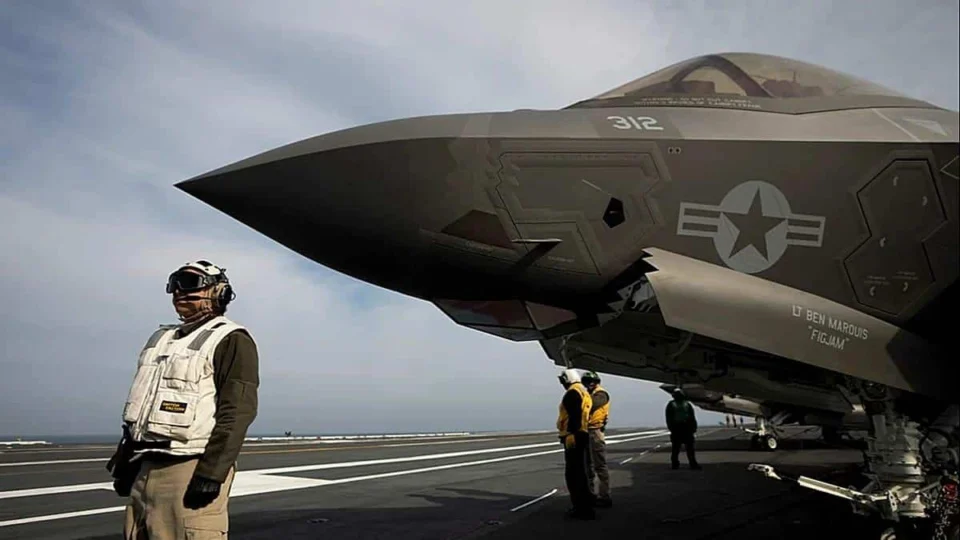
Belgium has recently been the subject of humorous criticism online after several French media outlets claimed that the nation spent billions on F-35 fighter jets, only to discover that its airspace is too small for proper use. Many French reports framed the news as a classic ‘blague belge’—a traditional Belgian joke—emphasizing that Brussels paid around €5.6 billion for 34 advanced US-made aircraft in 2018.
The reports suggested Belgium’s limited airspace would prevent full training exercises because of interference with commercial flight paths. Yet, according to Defence Minister Theo Francken, these claims are exaggerated. He explained on X that Belgium has long trained abroad due to its geographical constraints, and the new F-35s are no exception. These aircraft, which boast advanced sensors and extended range, will participate in both domestic and international training missions.
Francken noted that collaboration with nearby nations such as the Netherlands, Norway, and Italy is already in progress to expand airspace access for pilot training. He emphasized this as a fundamental benefit of NATO—mutual cooperation among allies. The minister also reassured citizens that these operations would not disrupt commercial air traffic, despite a massive increase in civil aviation over the decades. Current data from Eurocontrol shows around 3,300 daily flights across Belgium and Luxembourg, of which nearly 70% are overflights.
Training Challenges and International Cooperation
Virginie Flawinne, a senior captain in the Belgian Air Force, confirmed that while some training exercises can still take place within Belgium, realistic and modern combat preparation demands access to wider airspace. She explained that existing zones are already tight for F-16 missions, so complex exercises and simulator sessions must continue abroad. Flawinne underscored cooperation as the most effective path forward for Belgium’s defense strategy.
Although the country’s Directorate General for Air Transport declined to comment, the Belgian armed forces clearly view international partnerships as essential in maintaining effective pilot readiness.
French Media Banter and the Ongoing ‘Dogfight’
The friendly rivalry between France and Belgium has also spilled into debate over performance and reliability. Reports noted that only three of the four scheduled F-35s arrived in Belgium in October, with the fourth stranded in Portugal following a technical glitch. A Lockheed Martin repair team was dispatched to address the issue.
Furthermore, some French outlets highlighted the supposed superiority of France’s Dassault Rafale fighter jet, citing a simulated NATO dogfight in Finland that allegedly favored the Rafale. Advocates point out that it is cheaper to operate and offers France more strategic independence through domestic production.
Nevertheless, Belgian officials like Francken and N-VA advisor Joren Vermeersch remain steadfast in their belief that the F-35 is unparalleled. Francken emphasized its radar capabilities, which can detect Russian drones invisible to Rafales or older F-16s. Vermeersch added that Lockheed Martin manufactures 15 units monthly—matching an entire year’s output for the Rafale—and claimed the F-35’s technology currently has no equal in modern aviation.
Though humor continues to circulate around Belgium’s modest skies, the country stands firm on its investment, arguing that strategic cooperation and cutting-edge capabilities will ensure its place in Europe’s defense framework for decades to come.